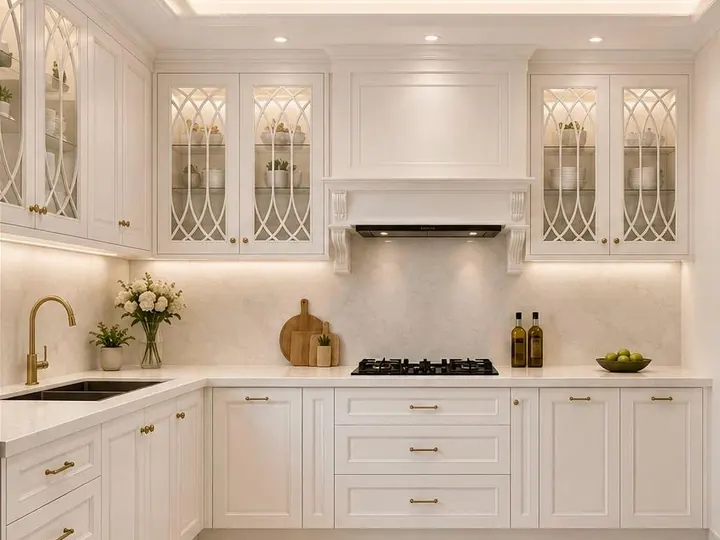

A good result for Smart modular kitchen Lucknow begins long before cabinet manufacturing. It requires a practical brief for practical smart-kitchen features, supported by accurate measurements and decisions that reflect lighting, charging, appliance planning and sensors.
This guide is written for families interested in convenience, safety and energy control. It explains the choices that influence daily use, durability, budget and installation, while avoiding the vague promises that make quotations difficult to compare.
- Choose features that solve a recurring task
- Plan power, data and ventilation safely
- Keep manual operation available
- Avoid proprietary systems without service support
Start with problems worth solving
Smart lighting, sensor-controlled profiles, charging drawers, appliance monitoring and leak alerts can improve convenience. Choose features that solve a repeated task rather than adding technology only because it is new.
Plan infrastructure before cabinets
Power points, dedicated circuits, ventilation, network coverage and cable routes must be coordinated before fabrication. Avoid extension boards hidden inside cabinets and keep heat-producing adapters ventilated and accessible.
Decision checklist
- Room and service measurements verified for lighting, charging, appliance planning and sensors
- Appliance models and ventilation requirements recorded
- Storage requirements prioritised by daily frequency
- Material, hardware and worktop specifications written
- Installation scope, exclusions and after-sales contact confirmed
Keep safety and manual control
Gas detection, water-leak sensors and timed lighting can be useful, but they should not replace good plumbing, ventilation or electrical protection. Important functions should still work manually when an app, sensor or network is unavailable.
Check serviceability
Ask whether components use standard sizes, whether replacement drivers and sensors are locally available and who will service them. Technology that cannot be repaired can turn a small fault into cabinet dismantling.
A reliable project process
Regardless of style, a kitchen becomes easier to control when each decision is made at the correct stage. The process below creates clear approval points and reduces expensive changes during fabrication.
- SurveyMeasure the room, services, openings, levels and access conditions.
- BriefRecord users, appliances, storage, style preferences and budget priorities.
- DesignApprove the layout, elevations, internal modules, lighting and material palette.
- SpecifyDocument board grades, finishes, hardware series, worktop and exclusions.
- ExecuteCoordinate site readiness, production, installation and final snag correction.
Common mistakes to avoid
Most kitchen problems are not caused by one dramatic decision. They come from small omissions that become visible only during installation or daily use.
- Choosing a layout from a photograph before measuring the room
- Freezing cabinet dimensions before confirming appliance models
- Comparing prices without matching material and hardware specifications
- Ignoring ventilation, plumbing access and electrical load
- Approving production without dimensioned drawings
- Leaving installation, civil work and after-sales responsibility unclear
Plan the specification before you commit the budget
For Smart modular kitchen Lucknow, the strongest next step is a measured discussion about your room, cooking routine, appliances and priorities. Mum Grhum can help translate those details into a practical design and itemised scope.
Questions about Smart modular kitchen Lucknow
Begin with a measured site assessment, an appliance list, storage requirements and a realistic budget range. The layout should be resolved before colours and decorative finishes.
Compare workflow, usable storage, cabinet dimensions, materials, hardware, service coordination, installation scope, warranty and exclusions—not only rendered images.
Yes. A modular system should still be tailored to the room, users, cooking habits, appliances and maintenance preferences.
It reduces ambiguity by recording exactly what will be supplied, how it will be measured, what is excluded and who is responsible for each part of execution.